Cracking the Asia Code
A vivid scene in a Tokyo boardroom reveals the gap between Western presentation-driven business and Asian relationship-driven trust. This chapter sets the stage for everything that follows.
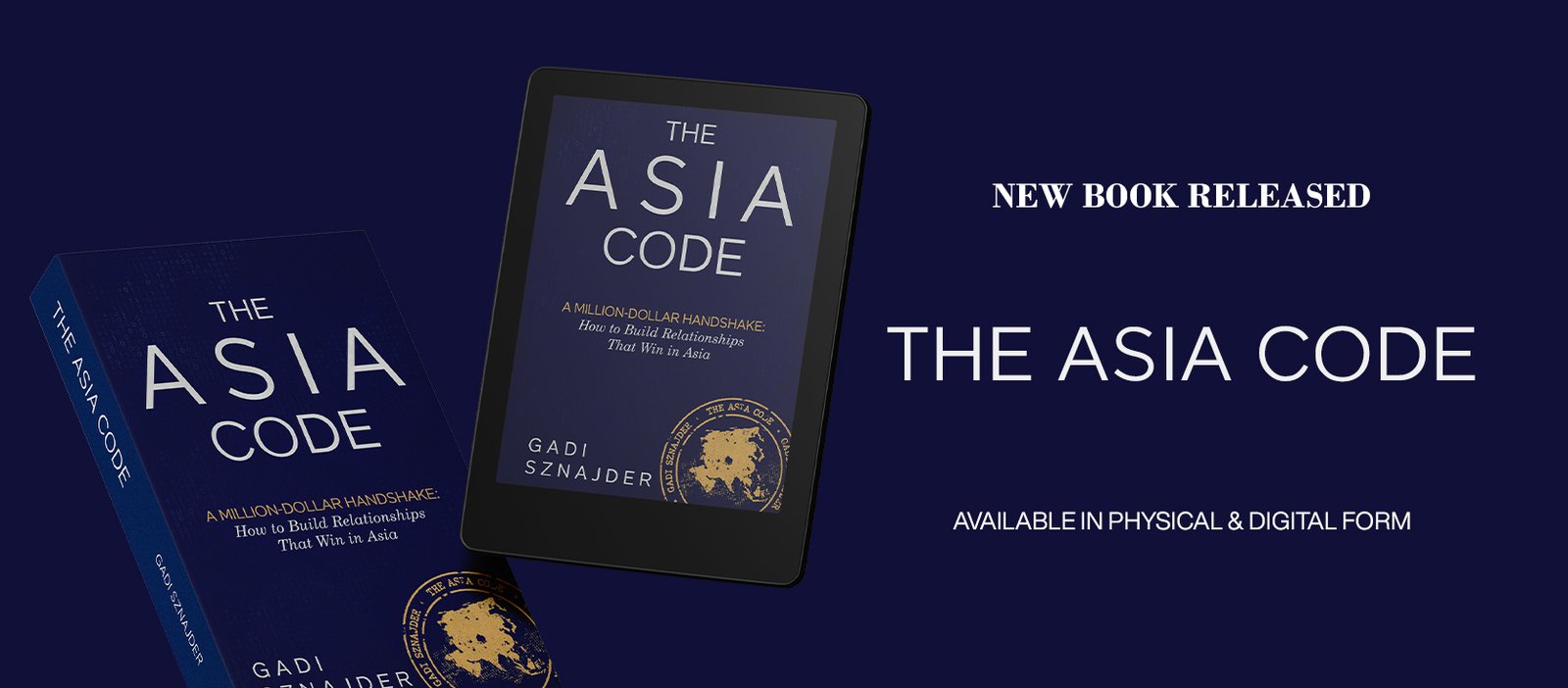
New Book Release
How to Build Relationships That Win in Japan, China, and South Korea
Western business is often played like Chess: linear, aggressive, and focused on capturing the deal. In Asia, the game is Go, a strategy of influence, patience, and encirclement. The Asia Code provides the frameworks you need to navigate this profound cultural shift, turning one-time transactions into lasting, million-dollar partnerships. Written by a practitioner with two decades of experience on the front lines of cross-cultural business, this is the playbook you wish you had before your first meeting in Tokyo, Beijing, or Seoul.
★★★★★ 5.0 on Amazon | Available in Physical and Digital Form
Success in East Asian markets requires more than basic etiquette or a translated pitch deck. It demands a fundamental shift in how you perceive trust, hierarchy, and negotiation. The Asia Code moves beyond academic theory to offer battle-tested strategies drawn from real negotiations, real partnerships, and real failures.
The book introduces the concept of Relationship Velocity, a framework for accelerating the trust-building process by focusing on character-based trust rather than technical competence alone. It details the Four Pillars essential for success in Asian business: Hierarchy and Harmony, High-Context Communication, Relationship-based Deals, and the Long Game. And it provides country-specific playbooks for Japan, China, and South Korea, the three largest and most complex markets in East Asia.
Whether you are a supply chain manager negotiating with a Japanese manufacturer, a sales leader entering the Chinese market, or a corporate executive building a partnership in Seoul, this book gives you the cultural intelligence to turn a simple handshake into a lasting, profitable relationship.
“In Asia, you aren't just presenting a product; you are proposing a marriage for the next fifty years.”
“Nobody signs because the slides are good. They sign because they believe you will not disappear.”
“The real art of cracking the Asia Code is not about decoding a culture; it is about connecting with a person.”
Experience the writing style, real-world case studies, and practical insights that readers describe as genuinely eye-opening. Read this preview to discover why cultural intelligence is the ultimate competitive advantage in Asian business.
Preface / Introduction Preview
Every failed deal has a visible explanation and an invisible one. The visible explanation is easy to write in a report: the price was wrong, the timing was bad, the partner was not ready, the market was too complex. The invisible explanation is usually quieter. Trust was never built. The hierarchy was misread. Silence was mistaken for agreement. Patience was confused with indecision.
The Asia Code begins with that invisible layer, because it is where many Western companies lose before the negotiation formally begins. In Tokyo, Beijing, and Seoul, the meeting room is rarely the whole game. A polished presentation may open the door, but credibility, consistency, and character determine whether anyone invites you deeper into the relationship.
Western business often rewards the speed of chess: direct moves, aggressive positioning, and a clear path toward checkmate. East Asian business often resembles Go: patient placement, long memory, encircled influence, and the slow creation of advantage. The shift is not cosmetic. It changes what counts as progress, what counts as respect, and what counts as proof that you are worth trusting.
This book is for the executive, founder, sales leader, supply chain manager, and negotiator who knows that entering Asia requires more than a market-entry deck. It requires cultural precision. It requires the humility to observe before pushing. It requires the discipline to build a relationship that can survive pressure, ambiguity, and time.
The chapters that follow translate two decades of cross-cultural business experience into practical frameworks for Japan, China, and South Korea. They are not etiquette lists. They are operating principles for people who need to build partnerships that last.
The real art of cracking the Asia Code is not about decoding a culture. It is about connecting with a person, and doing so with enough patience, respect, and strategic clarity that a handshake becomes the beginning of something valuable.
Seven chapters. Three countries. Three proprietary frameworks for lasting success.
A vivid scene in a Tokyo boardroom reveals the gap between Western presentation-driven business and Asian relationship-driven trust. This chapter sets the stage for everything that follows.
The foundational framework: Hierarchy and Social Order, the Art of Indirect Communication, Strategic Patience and Relationship Investment, and Navigating Ambiguity. Understanding these pillars is the prerequisite for success in any East Asian market.
How to read between the lines, decode high-context communication, and build the character-based trust that Asian business partners value above all else. Introduces the book's three proprietary frameworks: BRIDGE, TRUST, and ADAPT.
Navigating consensus-driven decision-making, the art of silence, the role of ritual, and the patience required to earn trust in the world's most process-oriented business culture.
Understanding the power of guanxi, the critical importance of mianzi, and the informal leverage that drives Chinese business negotiations.
Decoding kibun, the intensity of Korean relationship-building, the role of chaebols, and the fast-paced pali-pali culture that demands both speed and deep personal bonds.
The hidden structures of power, influence, and decision-making that operate beneath the visible surface of every Asian business interaction. This chapter ties together the lessons from all three countries.
The practitioner's journey from student to master. How to internalize the frameworks, develop radical empathy, and transform cultural intelligence from a set of rules into a way of life.
Rated 5.0 Stars on Amazon
“The Asia Code is different. Gadi Sznajder doesn't just give you a checklist of protocols; he teaches you how to actually connect with people. What I loved most is how it simplifies the massive cultural gap between the West and East Asia.”
M.K. (Amazon Review)
“The book moves beyond theory laid by Geert Hofstede and Edward Hall by offering practical lessons on Japan, China, and South Korea. I highly recommend this for supply chain managers, sales leaders, and corporate executives.”
R.F. (Amazon Review)
“The chess vs go analogy is genuinely eye-opening. It's one of those comparisons that sticks with you and reframes how you think about communication and negotiation more broadly, not just in Asia.”
J.L. (Amazon Review)
“Nobody signs because the slides are good. They sign because they believe you will not disappear. Sznajder writes in clear, muscular, highly serviceable sentences built to carry both example and lesson.”
D.P. (Goodreads Review)
“An excellent, easy to read guide for professionals seeking to scale their business in the Asia Market. This book does a spectacular job of explaining cultural values and how to shift perspective.”
K.C. (Amazon Review)
“In Asia, the human factor is, and always will be, the key to outstanding success. This is the one book every professional serious about succeeding in Asia must have in their toolbox.”
N.M. (Amazon Review)
“An eye-opening and highly practical read for anyone looking to understand how relationships truly work in Asian business culture. The author breaks complex cultural dynamics into clear, actionable insights.”
N.H. (Amazon Review)
“Reading this book has dispelled a lot of my preconceived ideas about how the Asian business people actually conduct business. After reading this you will realize that maybe some of your ideas were wrong too.”
M.G. (Amazon Review)
Real perspectives on cultural intelligence and the strategies behind The Asia Code.
Video thumbnail pending
Add the first vertical UGC video here.
Video thumbnail pending
Add the second vertical UGC video here.
Landscape video pending
Add the author or reader landscape video here.
For over two decades, Gadi Sznajder has operated at the intersection of global business and cultural intelligence, helping companies bridge cultural gaps, build trust, and scale internationally. As the Founder and CEO of GS Consultancy, he works with organizations seeking to expand into new markets with cultural precision, using the proprietary MPCB™ Framework to transform complexity into strategic clarity.
The Asia Code is the distillation of the lessons learned from facilitating partnerships and market entries across Europe and Asia, the book Gadi wishes he had read before embarking on his own extensive business adventures in the region.
The Asia Code by Gadi Sznajder is a practical guide for business professionals working with Japan, China, and South Korea. It explains why Western companies often fail in Asian markets by applying a Chess mindset when their counterparts operate with a Go mindset. The book provides frameworks including the Four Pillars of Asian Business Culture and the concept of Relationship Velocity.
The Asia Code is written for supply chain managers, sales leaders, corporate executives, and entrepreneurs who are doing business in or planning to enter East Asian markets, specifically Japan, China, and South Korea.
The book introduces three proprietary frameworks for cross-cultural business: the BRIDGE framework, the TRUST framework, and the ADAPT framework. It also details the Four Pillars of Asian Business Culture.
Relationship Velocity is a concept introduced in The Asia Code that describes how to accelerate the trust-building process in Asian business cultures by focusing on character-based trust rather than technical competence alone.
Available worldwide in paperback and digital formats. Start building the relationships that win in Asia.